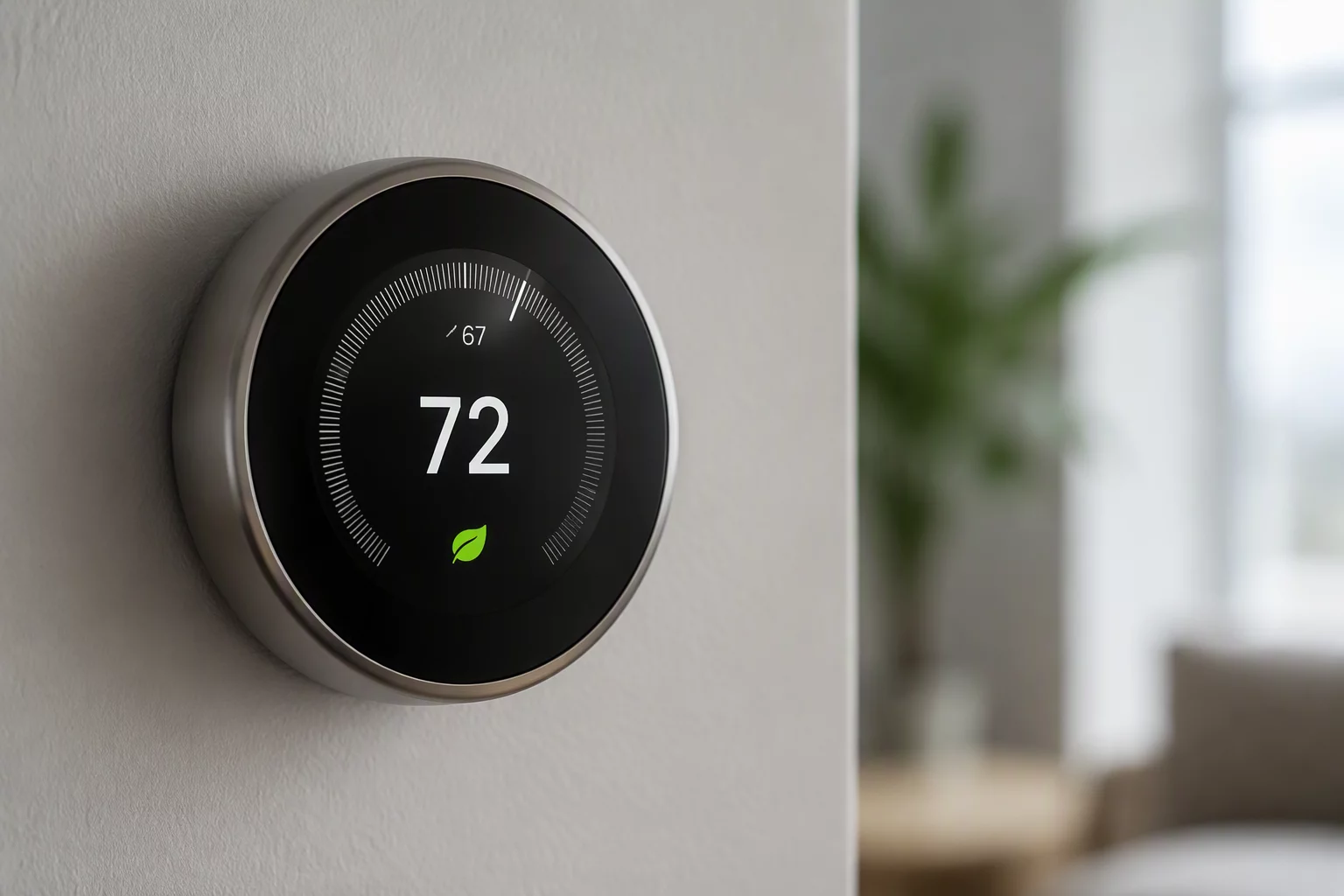
Smart thermostats represent a fundamental shift from reactive temperature management to proactive environmental architecture. By analyzing internal thermal load patterns and external weather shifts, modern smart control systems maintain strict temperature stability while reducing equipment cycling stress and overall utility expenditure.
Intelligent Thermal Modulation & Precision Zoning
Traditional thermostats operate strictly on binary thresholds, activating cooling or heating equipment at maximum output until a static sensor registers change. In contrast, modern smart thermostats leverage multi-stage algorithms and auxiliary sensor arrays distributed across distinct living zones. This continuous feedback loop prevents room-to-room temperature stratification, diminishes ductwork thermal shock, and allows heat pumps and variable-speed compressors to run at lower, whisper-quiet frequencies for extended lifespans.
Integrating predictive smart controls into residential HVAC systems delivers measurable thermal stability within 0.5 degrees, eliminating wasteful peak cycling and substantially decreasing carbon output.
— Architectural Climate Standards Committee
Algorithmic Energy Optimization & Automated Setbacks
Smart thermostat architecture incorporates learning algorithms that adapt to occupancy habits, solar heat gains through glazed surfaces, and building envelope thermal retention. Instead of rigid programmed timers that fail during routine variations, geofencing and motion detection ensure setback temperatures activate automatically when zones are unoccupied. When cooling or heating is required before arrival, the system calculates the exact ramp-up duration needed based on exterior ambient temperatures.
Key Engineering Guidelines
- Dynamic adaptation to ambient humidity levels for true perceived comfort indexing.
- Automated maintenance alerts for filter saturation, airflow restriction, and refrigerant pressure drops.
- Seamless integration with hydronic radiant systems, variable refrigerant flow (VRF), and multi-stage heat pumps.
- Granular energy auditing reports detailing real-time kilowatt consumption and compressor run hours.
Remote Diagnostic Telemetry and System Longevity
Beyond day-to-day comfort adjustments, smart thermostats act as comprehensive telemetry hubs for HVAC technicians. Detailed error logging and thermal decay tracking reveal failing capacitors, restricted ductwork, or gradual refrigerant leaks long before catastrophic breakdown occurs. Pairing smart controls with professional preventative maintenance ensures residential and commercial installations achieve peak operational efficiency year-round.