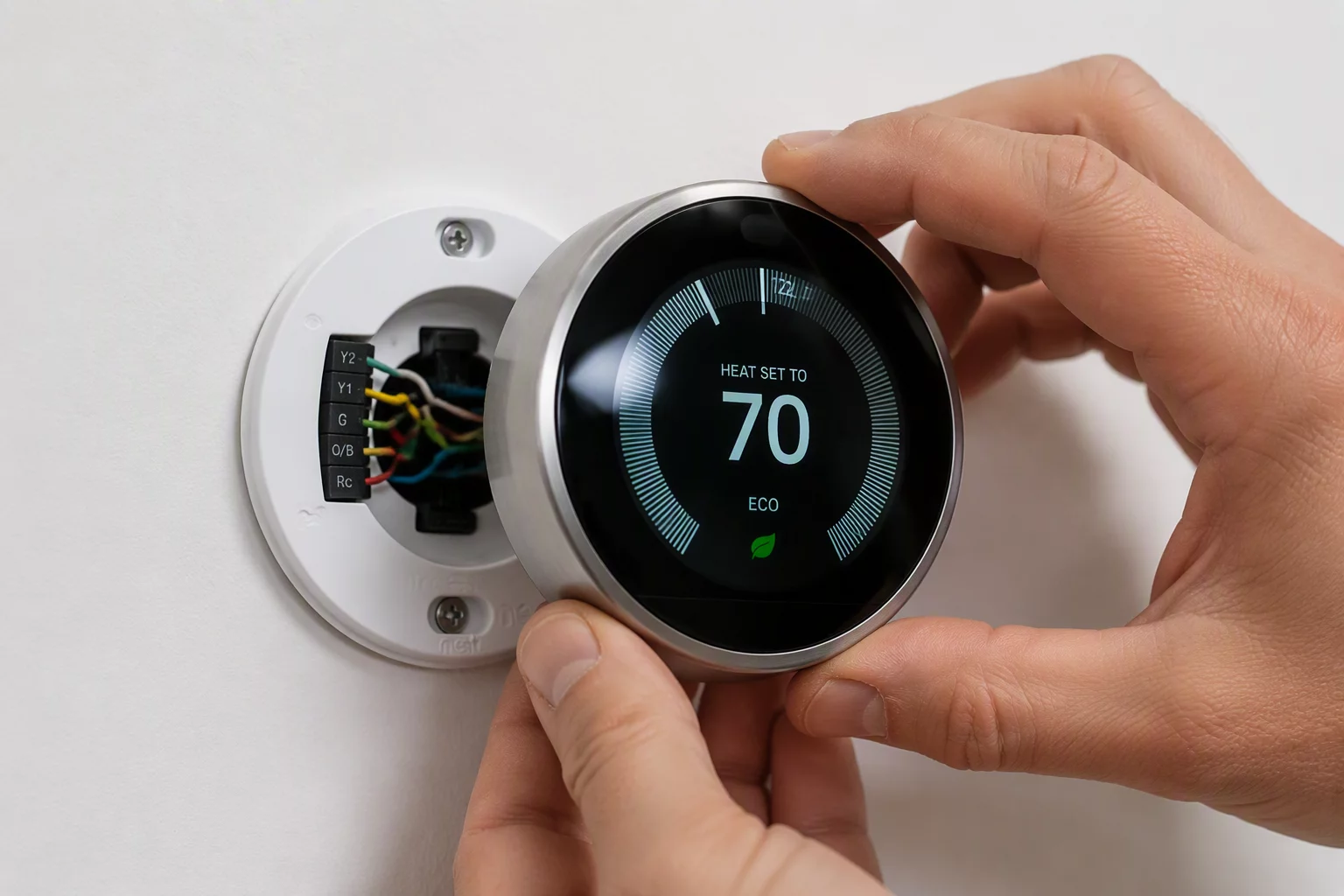
Engineered Thermostat Upgrades & Smart Integration
An outdated or drifting thermostat directly forces heating and cooling machinery to work harder than necessary. Aging mechanical bimetallic strips and uncalibrated digital relays frequently misread room temperatures by three to five degrees, generating unnecessary furnace ignition cycles and excessive compressor run times. Replacing legacy controls with modern digital or smart units restores strict thermal regulation across every zone.
Our technical team assesses your complete electrical relay configuration, common wire availability, and multi-stage heating or cooling lines before mounting new hardware. Modern programmable devices communicate seamlessly with variable-speed air handlers and heat pumps, eliminating short cycling and drastically lowering seasonal utility overhead.
Service Specifications
Key Benefits of Precision Temperature Control
Modern climate controllers do far more than simply trigger mechanical relays on and off. Advanced thermostat replacement delivers granular control over humidity, remote scheduling, and system health reporting throughout the year:
- Continuous C-wire voltage testing to prevent erratic power cycling or unexpected hardware resets.
- Automated geofencing and programmable schedules that adapt ambient temperatures when rooms remain unoccupied.
- Multi-stage compressor and heat pump compatibility for balanced, low-load energy consumption.
- Integrated indoor air quality alerts that track air filter lifespans and maintenance timelines.
Whether you need a straightforward programmable unit or a cloud-managed smart hub integrated with your mobile device, our technicians ensure neat low-voltage wiring, clean wall plate mounting, and complete end-to-end system testing.
Exact thermal feedback is the cornerstone of any efficient HVAC system. Upgrading the thermostat is the fastest intervention to stabilize temperatures and protect core mechanical units from unnecessary wear.Engineering Standards Board, Kelvin HVAC
Engineering Workflow
Electrical & Relay Assessment
The technician inspects the low-voltage terminal bundle at the existing subbase, tests 24-volt transformer output, and confirms common wire continuity back to the furnace or air handler control board.