Diagnostic Accuracy & High-Performance AC Restoration
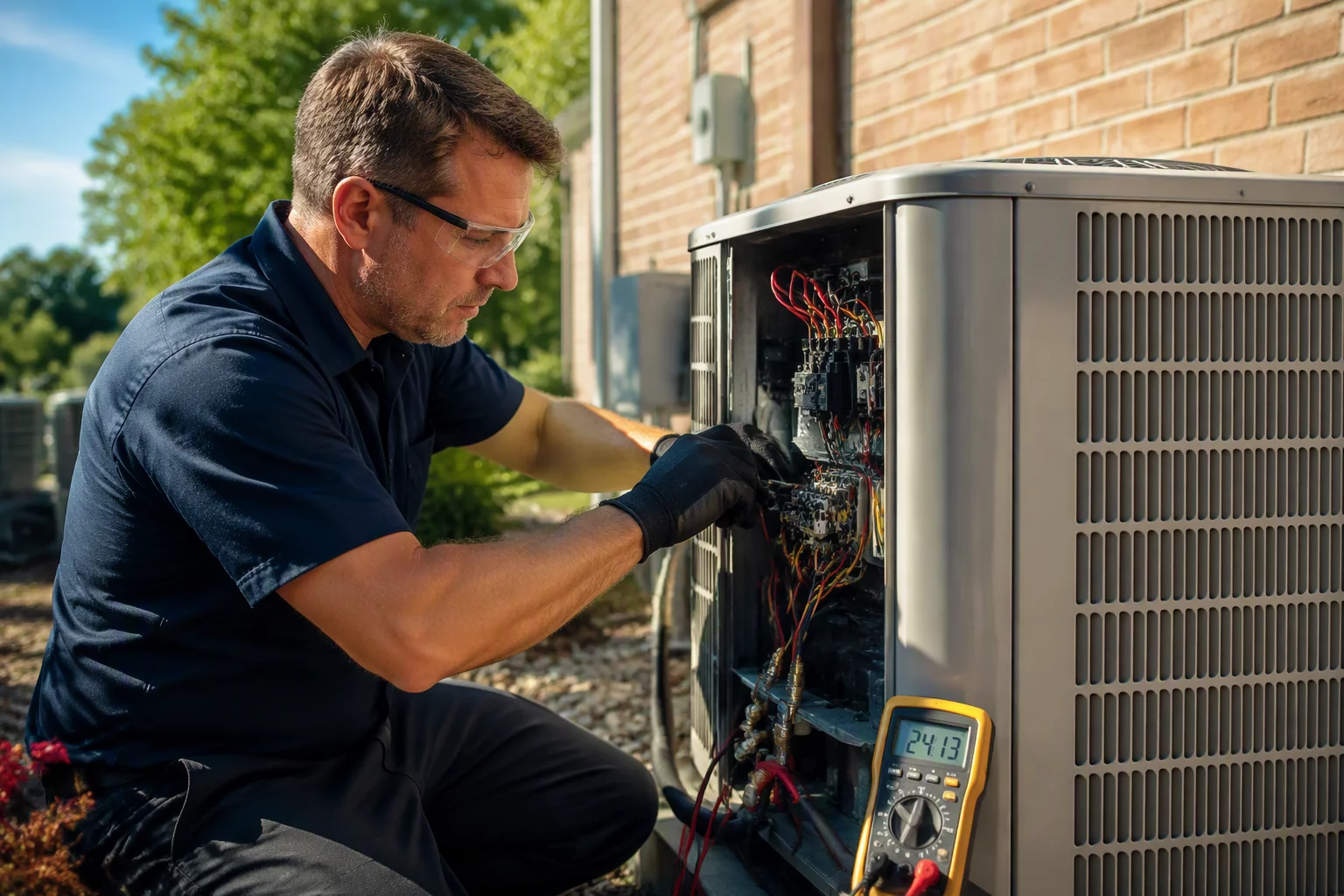
When an air conditioning unit malfunctions during peak heat cycles, indoor climate control degrades rapidly, creating uncomfortable conditions and straining connected mechanical systems. Our field technicians deploy digital manifold gauges, acoustic refrigerant leak detectors, and thermographic sensors to isolate electrical faults, compressor seizing, or thermal expansion valve bottlenecks within minutes of arriving on site.
Every repair protocol follows strict factory tolerances and ASHRAE climate management standards. Technicians measure subcooling, superheat values, and total static duct pressure rather than merely replacing failed surface parts. This holistic methodology restores nominal airflow rates, optimizes power consumption, and protects core cooling machinery against recurring seasonal breakdown.
Service Specifications & Engineering Standards
Common Air Conditioning Issues We Solve
Contemporary central cooling machinery combines micro-electronic relay panels, variable-speed fan motors, and high-pressure refrigerant loops. A failure in one subsystem swiftly impairs overall heat exchange capability. Our repair engineers routinely eliminate the following disruptions:
- Frozen evaporator coils triggered by blocked cabin filters, failed blowers, or low charge.
- Failed dual-run capacitors, pitted contactors, and intermittent control board relays.
- Micro-fractures in copper line sets located with nitrogen pressure testing and repaired via silver brazing.
- Compressor short-cycling and excessive vibration requiring hard-start kit integration or bearing remediation.
Fixing these mechanical bottlenecks promptly safeguards the motor windings from irreversible thermal stress and prevents severe voltage spikes across your residential electrical panel.
Thermal equilibrium in cooling machinery depends on microscopic calibration between refrigerant phase changes and unrestricted cubic airflow.Chief HVAC Field Engineer, Kelvin Technical Team
Engineering Workflow
Step 1: Multichannel Thermodynamic Audit
Technicians inspect pressure transducers, record delta-T across the cooling coil, evaluate motor winding resistances, and analyze electronic control codes for hidden faults.