Precision Environmental Air Quality Solutions
Modern residential and commercial structures are sealed tightly for thermal insulation, which inadvertently traps airborne particulates, volatile organic compounds, and excess humidity indoors. Our indoor air quality diagnostics evaluate real-time particle concentrations down to 0.3 microns, detecting biological allergens, chemical emissions, and ventilation deficits throughout your distribution channels.
We integrate whole-building air scrubbers, hospital-grade filtration units, bipolar ionization devices, and ultraviolet germicidal arrays directly into your existing duct network. These specialized retrofits ensure active sanitation of every cubic foot of circulated air while preserving balanced system static pressure.
Service Specifications
Comprehensive Air Purification & Humidity Control
Maintaining clean indoor air requires an exact balance between high particle capture and continuous airflow rates. Overly restrictive filters strain blower assemblies, while inadequate filtration allows pollen, dust mites, and industrial vapors to recirculate without obstruction.
- Whole-home HEPA filtration integration capable of capturing 99.97% of airborne microbes and fine particulates.
- In-duct germicidal UV-C light installations that neutralize viruses, mold spores, and bacteria on the evaporator coil.
- Dedicated dehumidification and humidification units that maintain healthy relative humidity between 40% and 50%.
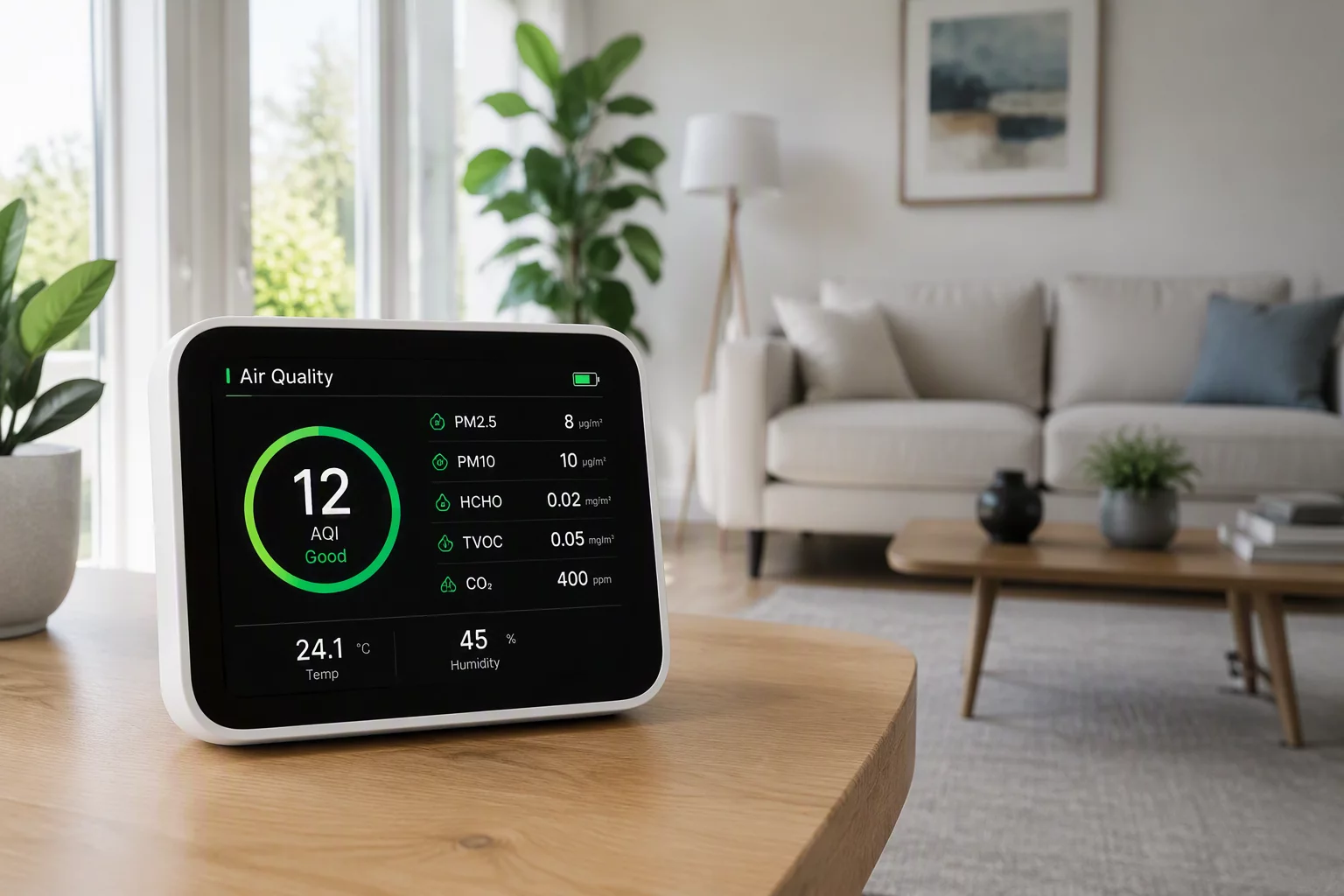
- Continuous indoor air monitoring sensors with automated ventilation dampers and real-time VOC tracking.
Routine IAQ assessments safeguard respiratory health, eliminate persistent odors, and stop mold propagation inside ductwork. Keeping internal mechanical coils sanitized ensures optimal heat exchange and lower seasonal energy draw.
Clean air is an essential component of building engineering that protects occupant health and extends HVAC component longevity.Lead IAQ Environmental Specialist, Kelvin HVAC
Engineering Workflow
Multi-Point Airflow & Contaminant Audit
Technicians deploy optical particle counters, carbon dioxide monitors, and VOC sensors to measure indoor air metrics across all occupied building zones.